
- Suneel Mekala
- October 2025
- Artificial Intelligence
Healthcare is no longer limited to hospitals, doctors, and traditional treatments. Today, Artificial Intelligence (AI) is becoming a core technology that helps medical professionals diagnose diseases faster, predict health risks earlier, and deliver more personalized care.
From medical imaging to virtual assistants, AI is quietly transforming how healthcare systems operate. It is not replacing doctors — it is empowering them with smarter tools and better insights.
This shift is making healthcare more accurate, efficient, and accessible for everyone.
What is AI in Healthcare?
AI in healthcare refers to the use of machine learning, deep learning, and data analytics to analyze medical data and support clinical decisions.
It helps in:
→ Diagnosing diseases
→ Monitoring patient health
→ Predicting risks
→ Automating hospital workflows
→ Improving patient experience
Instead of manual processes, hospitals can now rely on intelligent systems that learn from large datasets and continuously improve performance.
Key Applications of AI in the Medical Field
1. AI for Diagnosis and Medical Imaging
Medical imaging generates massive amounts of data every day. AI systems can analyze scans much faster than humans and detect patterns that may be difficult to notice.
AI helps doctors:
→ Detect tumors in MRI and CT scans
→ Identify fractures in X-rays
→ Recognize early signs of cancer
→ Reduce diagnostic errors
This leads to faster and more accurate diagnoses, which directly improves patient survival rates.
2. Predictive Analytics and Early Risk Detection
AI uses patient history, lab reports, and lifestyle data to predict potential health problems before they become severe.
It can forecast:
→ Heart disease risks
→ Diabetes complications
→ Stroke probability
→ ICU emergencies
→ Hospital readmissions
With early warnings, doctors can take preventive action rather than reactive treatment, saving both lives and costs.
3. Virtual Health Assistants and Chatbots
AI-powered assistants are improving patient support and reducing hospital workload.
They help with:
→ Booking appointments
→ Answering medical queries
→ Providing medication reminders
→ Basic symptom checks
→ Telemedicine support
Patients receive quick assistance, and healthcare staff can focus on critical tasks instead of repetitive work.
4. Personalized Treatment and Drug Discovery
Every patient is different, and AI helps tailor treatments based on individual data such as genetics, medical history, and lifestyle.
Benefits include:
→ Personalized treatment plans
→ More effective medications
→ Fewer side effects
→ Faster drug discovery
→ Optimized clinical trials
AI simulations significantly reduce the time and cost required to develop new medicines.
Benefits of AI in Healthcare
The adoption of AI provides measurable advantages across the healthcare ecosystem.
→ Improved accuracy in diagnosis
→ Faster decision-making
→ Reduced operational costs
→ Better patient outcomes
→ 24/7 healthcare support
→ Less paperwork for doctors
Overall, AI makes healthcare more efficient and scalable.
Challenges and Considerations
Despite its potential, AI also comes with challenges that must be addressed carefully.
→ Data privacy and security
→ High implementation costs
→ Need for trained professionals
→ Ethical concerns
→ Regulatory compliance
The goal is to create a balanced system where technology supports human expertise rather than replacing it.
The Future of AI in Medicine
The next decade will see rapid innovation in healthcare technology.
We can expect:
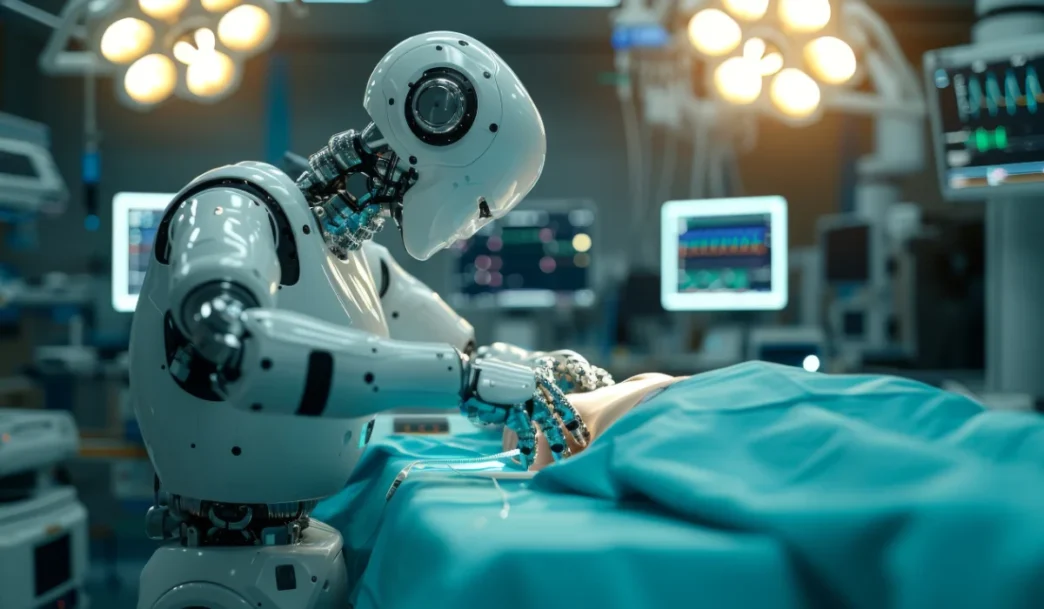
→ AI-assisted robotic surgeries
→ Smart wearable health devices
→ Real-time patient monitoring
→ Fully digital hospitals
→ Advanced telemedicine platforms
Healthcare is shifting from hospital-centered care to continuous, data-driven care.
Organizations that adopt AI early will lead this transformation.
Final Thoughts
Artificial Intelligence is not just another technology trend. It is a fundamental shift in how healthcare is delivered.
By combining medical expertise with intelligent systems, we can:
→ Save more lives
→ Reduce costs
→ Improve accessibility
→ Provide better patient experiences
The future of healthcare is intelligent, predictive, and AI-powered.